
How Air Duct Cleaning Improves Airflow in Your Home?
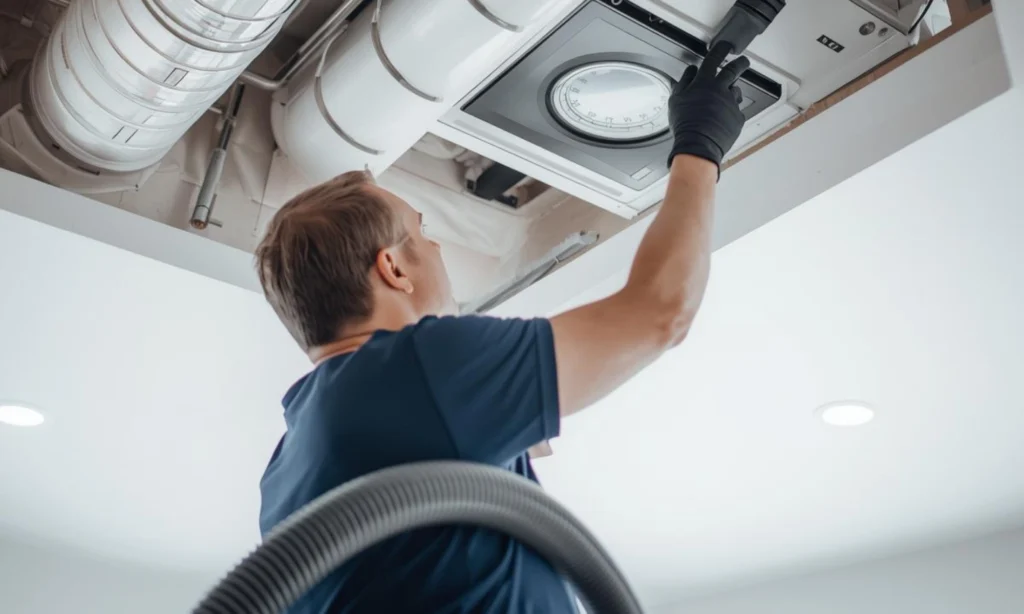
Have you noticed certain rooms in your home feel stuffy while others remain uncomfortably cold? Does your HVAC system seem to run constantly without achieving the desired temperature? These common frustrations often point to a hidden culprit lurking within your walls. Understanding how air duct cleaning improves airflow can transform your home’s comfort, energy efficiency, and overall air quality. At K&M Solutions, we specialize in helping Evansville homeowners breathe easier through professional air duct cleaning services. Your ductwork serves as the respiratory system of your home; when it becomes clogged with dust, debris, and contaminants, the entire house suffers. Consequently, restricted airflow forces your heating and cooling equipment to work harder, driving up utility bills while compromising comfort. In this comprehensive guide, we will explore the mechanics of airflow improvement, examine the tangible benefits of clean ductwork, and explain why regular maintenance matters for your family’s health and your home’s efficiency. Furthermore, we will address common questions homeowners ask about this essential service. Understanding Your Home’s Airflow System Before diving into how air duct cleaning improves airflow, you must understand how air moves through your residence. Your HVAC system operates as a closed loop, continuously circulating conditioned air through supply ducts and returning it via return ducts. This circulation maintains consistent temperatures while filtering out airborne particles. However, over time, dust accumulates within these pathways. Pet dander, pollen, mold spores, and construction debris gradually coat the interior surfaces. As a result, the smooth passage of air becomes obstructed, creating resistance that your blower motor must overcome. Therefore, cleaning these pathways restores the designed airflow capacity your system needs to function optimally. The Science Behind Restricted Airflow When ducts become contaminated, several physical changes occur. First, the rough, debris-covered surfaces create turbulence rather than smooth laminar flow. This turbulence increases friction, requiring more energy to push air through the system. Additionally, significant blockages can reduce the effective diameter of your ductwork, further limiting capacity. Moreover, dirty filters and clogged coils compound these problems. The combination creates a cascade of inefficiency that affects every aspect of your indoor environment. Understanding how air duct cleaning improves airflow begins with recognizing these interconnected factors that degrade system performance. According to the U.S. Environmental Protection Agency indoor air quality can be two to five times more polluted than outdoor air, making proper ventilation maintenance essential for health. How Air Duct Cleaning Improves Airflow and Energy Efficiency One of the most compelling reasons to invest in professional duct cleaning involves the potential for substantial energy savings. When your HVAC system operates with clean ductwork, it achieves peak efficiency without unnecessary strain. Reduced Energy Consumption Clean ducts allow air to travel freely from your furnace or air conditioner to every room in your home. Without obstructions, the blower motor requires less electricity to maintain proper circulation. In fact, studies conducted by the National Air Duct Cleaners Association indicate that clean systems operate more efficiently than neglected ones. Additionally, when airflow improves, your thermostat reaches the set temperature more quickly. This means your equipment runs for shorter cycles, consuming less fuel or electricity overall. Over the course of a year, these savings accumulate significantly, often offsetting the cost of professional cleaning services. Extended Equipment Lifespan Your HVAC system represents a substantial investment. Protecting this equipment ensures you maximize its service life while avoiding premature replacement costs. When ducts remain dirty, the increased workload accelerates wear on critical components such as motors, bearings, and compressors. Conversely, regular maintenance that includes air duct cleaning reduces mechanical stress. Your system operates within designed parameters rather than struggling against resistance. As a result, you enjoy reliable performance for years longer than poorly maintained systems. Consistent Temperature Distribution Perhaps the most noticeable benefit of improved airflow involves temperature consistency throughout your home. Many Evansville residents complain about hot and cold spots, where certain rooms never seem comfortable regardless of thermostat settings. These inconsistencies often stem from blocked or restricted ducts. When air duct cleaning improves airflow, conditioned air reaches every corner of your home equally. Bedrooms stay cool in summer, living areas remain warm in winter, and you eliminate the frustration of adjusting vents constantly without success. Health Benefits of Improved Airflow Through Duct Cleaning Beyond energy efficiency, clean ductwork significantly impacts your family’s health and wellbeing. The air circulating through your home passes through these channels multiple times daily, carrying whatever contaminants reside there. Reduction of Allergens and Irritants Evansville’s seasonal changes bring various allergens that infiltrate your home. Pollen in spring, dust in summer, and mold spores in humid conditions all find their way into your ductwork. Without proper cleaning, these particles continuously recirculate, triggering allergies and respiratory issues. Professional duct cleaning removes these accumulations at the source. Furthermore, our non-toxic sanitation services eliminate bacteria and mold without introducing harsh chemicals. Consequently, sensitive family members experience fewer symptoms, and everyone breathes cleaner air. The American Lung Association emphasizes that reducing indoor air pollutants is crucial for maintaining healthy lungs and preventing respiratory issues. Elimination of Unpleasant Odors Persistent musty smells often indicate mold growth or accumulated organic matter within your ducts. Pet odors, cooking smells, and tobacco smoke can also become trapped in the dust coating your ductwork, releasing gradually into your living spaces. When air duct cleaning improves airflow, it also removes these odor sources. Our specialized antibacterial fog treatment neutralizes smell-causing bacteria, leaving your home with fresh, clean air rather than masking odors with fragrances. Improved Respiratory Health For individuals with asthma, COPD, or other respiratory conditions, air quality directly affects daily comfort and health outcomes. Contaminated ducts harbor dust mites, pet dander, and microbial growth that aggravate these conditions. Clean ductwork reduces exposure to these triggers. Moreover, improved airflow means your air filtration system operates more effectively, capturing particles before they enter your living spaces. This creates a healthier environment where everyone can breathe easier. The Professional Air Duct Cleaning Process Understanding how air duct cleaning improves airflow requires knowledge of proper cleaning techniques. At K&M Solutions,
Can a Dirty Dryer Vent Cause a Fire? Essential Safety Guide for Evansville Homeowners
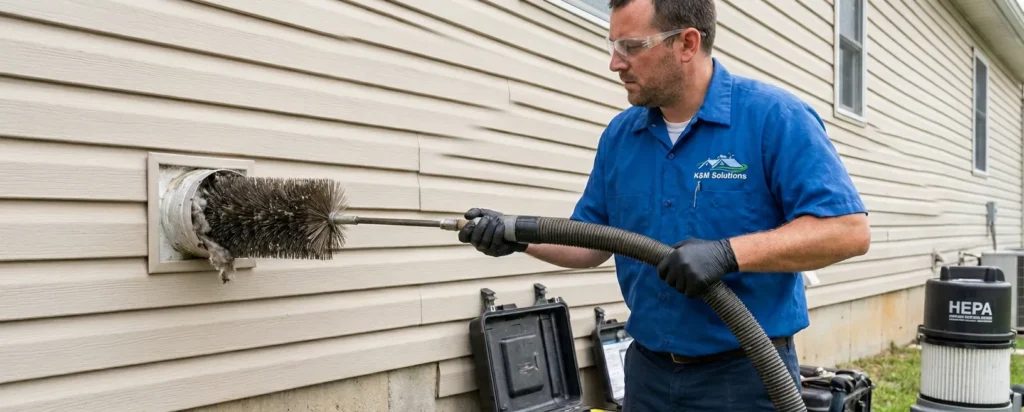
Can a dirty dryer vent cause a fire? Absolutely, and this question represents one of the most critical yet overlooked safety concerns facing Evansville homeowners today. Every time you toss a load of laundry into your dryer, you create a potential fire hazard that could threaten your family, your property, and everything you have worked hard to build. Many residents across Evansville, Indiana, and the surrounding Tri-State area operate their dryers daily without realizing the serious risks accumulating within their vent systems. Furthermore, the combination of high heat, restricted airflow, and highly combustible lint creates a perfect storm for household fires. According to the National Fire Protection Association (NFPA), failure to clean dryer vents ranks as the leading factor contributing to ignition in dryer-related home fires. In this comprehensive guide, we will explore exactly how a dirty dryer vent can cause a fire, identify the warning signs you should never ignore, and provide actionable prevention strategies to keep your home safe. Additionally, we will discuss why professional dryer vent cleaning from K&M Solutions LLC serves as your best defense against this preventable danger. Whether you are a longtime Evansville homeowner or new to the area, understanding these risks could save your home and potentially your life. Understanding the Fire Risk: How Lint Becomes Fuel The Science Behind Dryer Vent Fires To understand why a dirty dryer vent can cause a fire, you must first recognize what happens during every drying cycle. As your dryer tumbles clothes, it generates heat to evaporate moisture. Simultaneously, tiny fabric fibers break loose from your garments, creating lint. While your lint trap catches some debris, significant amounts escape into the vent system. Consequently, this lint accumulation creates multiple hazards. First, it restricts airflow, forcing your dryer to work harder and generate excessive heat. Second, lint itself is extremely combustible; in fact, campers often use dryer lint as fire-starting material because it ignites so easily. Therefore, when you combine accumulated lint with overheating components, you create conditions ripe for ignition. The U.S. Fire Administration (USFA) reports that clothes dryer fires account for approximately 2,900 residential building fires annually, resulting in an estimated 5 deaths, 100 injuries, and $35 million in property loss each year. Moreover, 34% of these fires occur specifically because of failure to clean the appliance and vent system. Why Evansville Homes Face Unique Risks Evansville homeowners encounter specific factors that increase their dryer vent fire risk. Our region experiences significant humidity variations throughout the year, and these moisture fluctuations can cause lint to clump and stick to vent walls more aggressively than in drier climates. Additionally, many homes in our area feature laundry rooms located in basements, interior closets, or second-floor installations, which require longer vent runs with multiple bends. These extended vent systems provide more opportunities for lint accumulation and make thorough cleaning more challenging for homeowners attempting DIY solutions. As a result, professional intervention becomes essential for comprehensive safety. Warning Signs: Recognizing When Your Dryer Vent Poses a Fire Hazard Clothes Taking Longer to Dry One of the earliest indicators that a dirty dryer vent can cause a fire involves extended drying times. If your jeans or towels require multiple cycles to reach full dryness, restricted airflow likely prevents proper moisture evacuation. This inefficiency forces your dryer to run longer and hotter, increasing fire risk while wasting energy. Excessive Heat in the Laundry Room When you touch your dryer after a cycle, does it feel unusually hot? Does your laundry room temperature spike during operation? These symptoms suggest your vent cannot exhaust hot air properly. Consequently, heat builds up within the appliance and surrounding area, creating dangerous conditions that could ignite accumulated lint. Burning Smells During Operation Perhaps the most alarming warning sign involves detecting burning odors while your dryer runs. This smell often indicates lint overheating near heating elements or within the vent duct. Should you notice this odor, immediately stop using your dryer and contact K&M Solutions LLC for emergency inspection and cleaning services. Visible Lint Accumulation Around the Vent Hood Step outside and examine your exterior vent hood while the dryer operates. If the flap barely opens or you observe lint debris around the opening, you have a significant blockage requiring immediate attention. Furthermore, if you notice lint collecting on the ground beneath the vent exit, your system has likely been clogged for some time. Dryer Shutting Off Unexpectedly Modern dryers often include safety mechanisms that shut down the unit when internal temperatures reach dangerous levels. If your dryer stops mid-cycle repeatedly, it may be protecting itself from overheating due to vent restrictions. Rather than resetting and continuing use, treat this as a serious warning that your dirty dryer vent can cause a fire if left unaddressed. The Consequences of Neglect: What Happens When You Ignore Vent Maintenance Escalating Fire Risk As lint continues accumulating, your fire risk increases exponentially. A partially clogged vent might simply reduce efficiency initially, but eventually, the blockage becomes complete. At this stage, temperatures can soar high enough to ignite lint instantly. Additionally, fires originating in dryer vents often spread quickly through ductwork into walls, attics, and other concealed spaces, making them particularly dangerous and difficult to extinguish. Structural Damage Beyond the Appliance When a dirty dryer vent causes a fire, the damage extends far beyond replacing your appliance. Flames can travel through ventilation systems, compromising structural integrity, destroying insulation, and damaging electrical systems. The cost of remediation typically reaches tens of thousands of dollars, and many families face displacement during repairs. Health Hazards from Poor Air Quality Even without fire ignition, clogged vents force lint, dust, and combustion byproducts back into your living space. This contamination aggravates respiratory conditions, triggers allergies, and reduces overall indoor air quality. For families with asthma sufferers or elderly members, these conditions pose significant health concerns. Increased Energy Costs and Appliance Wear Beyond safety concerns, restricted airflow forces your dryer to consume more electricity while delivering poorer results. Your utility bills climb steadily, and the additional
What Time of Year Should You Clean Your Chimney? An Evansville Homeowner’s Seasonal Guide
What time of year should you clean your chimney? This question becomes particularly important for Evansville homeowners as the Ohio River Valley’s crisp autumn air signals the approaching heating season. At K&M Solutions, we help Tri-State area residents prepare their fireplaces and wood-burning systems for safe, efficient operation throughout Indiana’s variable climate. Evansville’s position in the Midwest creates distinct seasonal patterns that affect chimney maintenance timing. From humid summers that accelerate masonry deterioration to freezing winters that stress flue systems, understanding optimal cleaning schedules protects your home and family. This comprehensive guide examines seasonal considerations for chimney sweeping, explains why timing matters for safety and convenience, and provides practical guidance for maintaining your venting system year-round. Whether you heat with a traditional fireplace in a historic Haynie’s Corner home, rely on a wood stove in a suburban Newburgh residence, or maintain a gas insert in a downtown loft, proper chimney care timing ensures reliable performance when you need it most. Understanding the Importance of Seasonal Chimney Maintenance Chimney cleaning, also known as chimney sweeping or flue maintenance, removes combustible creosote buildup, blockages, and debris that create fire hazards and ventilation problems. The timing of this service significantly impacts both safety and practicality. The Dangers of Creosote Accumulation Creosote, a tar-like byproduct of burning wood, accumulates on flue walls with each fire. This substance is highly combustible; when ignited, it causes dangerous chimney fires that can spread to roof structures and living spaces. Evansville’s cold winters encourage extended burning seasons, accelerating creosote buildup in frequently used fireplaces. Different burning practices create varying creosote types, from flaky soot to hardened glaze requiring specialized removal techniques. Regardless of form, accumulated creosote restricts airflow, reduces heating efficiency, and increases carbon monoxide risks. Regular professional evaluation determines when cleaning becomes necessary based on usage patterns and fuel types.K&M Solutions provides professional chimney inspection and cleaning using specialized equipment for all creosote conditions. Blockages and Animal Intrusions Chimneys provide attractive nesting sites for birds, squirrels, and raccoons, particularly during Evansville’s mild spring and summer months. Leaves, twigs, and debris also accumulate in uncapped flues, creating obstructions that prevent proper ventilation. Blocked chimneys force dangerous combustion gases, including odorless carbon monoxide, back into living spaces. Seasonal timing of chimney maintenance addresses these biological and debris blockages before the heating season begins. Spring and early summer inspections often reveal animal nesting activity that requires humane removal and preventive cap installation. Optimal Timing: Late Spring Through Early Fall For Evansville homeowners, the ideal window for chimney cleaning spans late spring through early fall, with specific timing depending on your heating system and usage patterns. Late Spring Cleaning Advantages Scheduling chimney maintenance in late spring, typically May through June, offers several practical benefits. The heating season has concluded, so immediate fireplace use is not compromised by cleaning appointments. Spring weather provides comfortable working conditions for technicians accessing roofs and exterior chimney components. Spring cleaning removes accumulated winter creosote before humid Evansville summers set in. Moisture interacting with acidic creosote accelerates flue liner deterioration and masonry damage. Addressing buildup promptly prevents this chemical damage and identifies any winter-related damage requiring repair before the next burning season.Additionally, spring scheduling avoids the fall rush when chimney service companies experience peak demand. K&M Solutions offers spring chimney maintenance specials with flexible appointment availability. Summer Maintenance Benefits Summer months, particularly July and August, provide excellent opportunities for comprehensive chimney care in the Evansville area. Extended daylight hours facilitate thorough inspections, and dry conditions allow masonry repairs to cure properly. For homeowners considering fireplace upgrades or insert installations, summer provides time for project completion before heating needs arise. Summer chimney evaluation also addresses any moisture intrusion issues evident after spring rains. Flashing repairs, crown sealing, and waterproofing treatments protect chimney structures from Indiana’s freeze-thaw cycles that begin in late autumn. However, summer humidity can make attic and roof access uncomfortable for technicians, and sudden thunderstorms occasionally delay exterior work. Despite these minor considerations, summer remains an excellent maintenance window. Early Fall: The Critical Preparation Period September and early October represent the last opportunity for pre-heating-season chimney preparation in Evansville. As temperatures begin dropping, homeowners naturally shift focus toward fireplace readiness. Cleaning during this period ensures safe operation from the first fire through winter’s coldest months. Fall cleaning appointments should be scheduled early, as demand peaks once temperatures drop. Waiting until late October or November risks delayed service during initial cold snaps when homeowners discover chimney problems preventing immediate fireplace use. K&M Solutions recommends booking fall appointments by Labor Day to guarantee preferred scheduling. Our fall chimney preparation services include comprehensive inspections, cleaning, and safety checks before the heating season begins. Seasonal Considerations for Different Heating Systems Evansville homes utilize various heating appliances, each with specific maintenance timing recommendations. Traditional Fireplaces and Wood Stoves Wood-burning systems require annual inspection and cleaning, typically after each burning season concludes. For Evansville homeowners who burn regularly throughout winter, spring cleaning removes substantial creosote buildup while allowing summer repairs before the next heating season. Heavy usage, defined as daily fires during cold months, may necessitate mid-season evaluations. Burning unseasoned wood, which is common when supply runs short during extended cold periods, creates accelerated creosote accumulation requiring more frequent attention.K&M Solutions offers wood-burning system maintenance programs tailored to your specific usage patterns. Gas Fireplace and Insert Maintenance Gas heating appliances require different maintenance schedules than wood-burning systems. While gas burns cleaner, producing minimal creosote, annual inspection remains essential for safety and efficiency. Venting systems accumulate debris, and gas components require calibration and leak testing. Summer provides ideal timing for gas fireplace service, as technicians can safely work with appliances that may still be warm from winter use. Fall maintenance is also appropriate, ensuring reliable operation when heating demands increase. However, gas systems can typically be serviced later into the season than wood-burning fireplaces since no creosote removal is required. Explore our gas fireplace inspection and repair services for Evansville homes. Pellet Stove Venting Systems Pellet stoves, increasingly popular in Evansville for
What’s Included in a Full Air Duct Cleaning Service?

This is a question that many homeowners in Evansville, IN, ask when they notice a layer of dust settling on their furniture shortly after cleaning or when their HVAC system seems to be struggling. Your air ducts are the lungs of your home, constantly circulating the air you breathe while filtering out debris, allergens, and pollutants. Over time, however, these hidden pathways can become clogged with pet dander, pollen, and construction dust. Understanding the comprehensive nature of professional cleaning is essential for any resident seeking to improve indoor air quality and protect mechanical systems. At K&M Solutions, we stress cleaning the entire system. Focusing just on visible vents doesn’t sufficiently sanitize your environment. Professionals use specialized tools and follow a thorough multi-step process to reach the core of your ventilation system. This guide outlines what to expect from a high-quality service when you hire an expert in Evansville. The Preliminary Inspection: The First Step of a Full Air Duct Cleaning Service Before any brushes are spun or vacuums are engaged, a technician must perform a thorough assessment. This is a critical part of determining what’s included in a full air duct cleaning service because every home in Southern Indiana is unique. Assessing System Integrity A technician will start by inspecting the supply and return ducts. They are looking for more than just dust; they are checking for signs of moisture, mold growth, or rodent activity. In Evansville, where humidity can fluctuate significantly, moisture in the ducts can promote microbial growth, requiring specialized sanitization treatments. The inspection also ensures that the ductwork is physically sound, without major leaks or disconnected sections that would reduce the effectiveness of the cleaning. Documentation and Transparency Modern professionals often use specialized cameras to show homeowners the “before” state of their system. This visual evidence helps explain the level of buildup and allows the technician to tailor the cleaning method to the specific debris found. Whether it is heavy lint from a nearby laundry room or fine drywall dust from a recent renovation, the inspection sets the stage for a successful outcome. High-Power Vacuuming and Negative Pressure The core of the process involves high-powered vacuum equipment, often mounted on a truck or a large portable unit. To understand what’s included in a full air duct cleaning service, you must understand the concept of “negative pressure.” Creating a Sealed Environment The technician will connect the vacuum system to the main trunk line of your HVAC system. By sealing off individual registers throughout the house, they create a powerful suction that pulls air toward the vacuum. This ensures that as dust is dislodged, it is sucked out of the home and into a containment unit, rather than being pushed out into your living room or bedrooms. Capturing Micro-Particles In Evansville, IN, we deal with a variety of outdoor pollutants. A professional service uses HEPA-filtered vacuums that capture particles as small as 0.3 microns. This is a vital component of the service for families dealing with asthma or severe allergies, as it ensures that the finest irritants are permanently removed from the premises. Agitation and Mechanical Brushing Suction alone is rarely enough to remove years of caked-on dust. The next phase of a full air duct cleaning service involves agitating the debris inside the metal or flex ducts. Specialized Agitation Tools Technicians use various “agitation” tools, such as motorized rotating brushes, air whips, and compressed-air “skipping” balls. These tools are fed through each individual vent. As they move through the ductwork, they vibrate the interior walls, knocking loose the debris that has adhered to the surface. Because the vacuum is still running, this loosened dust is immediately swept away toward the main filtration unit. Cleaning the Registers and Grills While the deep ductwork is being scrubbed, the visible parts of the system are not ignored. The service includes the removal and cleaning of all supply registers and return air grills. These are often washed or vacuumed to remove the greasy dust buildup that accumulates on the louvers. Cleaning these components is the “finishing touch” that makes the visible parts of your home look as fresh as the hidden ones. Cleaning the HVAC Components: Beyond the Ductwork A common misconception is that air duct cleaning only involves the pipes. However, to truly answer what’s included in a full air duct cleaning service, we must look at the air handling unit itself. The Blower Motor and Housing The blower motor is the “engine” that moves air through your home. If the fan blades are covered in dust, the motor has to work harder, leading to higher utility bills and premature mechanical failure. A full service includes the meticulous cleaning of the blower fan, the motor housing, and the surrounding cabinet. Evaporator Coils and Drain Pans In Evansville’s summer heat, your air conditioner’s evaporator coil becomes damp with condensation. This makes it a magnet for dust, which can form a thick “blanket” over the coils, significantly reducing cooling efficiency. A professional cleaning includes inspecting and cleaning these coils, along with the condensate drain pan, to prevent clogs and water damage. Sanitization and Deodorizing (Optional but Recommended) Once the physical debris is gone, some homeowners choose to add an antimicrobial treatment, which is often essential after water leaks, smoke damage, or persistent odors as part of a full air duct cleaning service. Fogging Treatments Technicians use a specialized fogger to mist an EPA-approved sanitizer through the ductwork. This treatment kills bacteria, mold spores, and viruses that may be clinging to the duct walls. In Southern Indiana, where mold can be a recurring issue, this step provides an extra layer of protection for residents’ health. Long-Term Odor Removal Sanitization eliminates the source of odors rather than masking them. Whether caused by must or pets, this process helps ensure fresher air from your vents. Final System Testing and Verification The last phase of the service involves putting everything back together and ensuring the system is running perfectly. Assessing the Investment: Costs Relative to Service

