Your dryer works hard to keep your laundry routine moving smoothly. However, most homeowners rarely think about what happens behind the scenes. The reality is that signs your dryer vent is clogged often appear long before a serious problem develops. In fact, recognizing these warning signals early can mean the difference between a quick maintenance call and a devastating house fire.
The humid subtropical climate of Central Florida creates unique challenges for dryer vent systems. High humidity levels can cause lint to clump together more readily. Additionally, the year-round warm temperatures mean families use their dryers consistently throughout every season. Consequently, lint buildup accelerates faster here than in cooler, drier regions.
At K&M Solutions, we specialize in helping homeowners identify and resolve ventilation issues before they escalate. In this comprehensive guide, we will explore the critical warning signs, explain why they matter, and show you exactly when to call a professional. Furthermore, we will share practical maintenance tips and answer the most common questions homeowners ask about dryer vent safety.
Table of Contents
ToggleWhy Dryer Vent Maintenance Matters in Central Florida
Before diving into the specific warning signs, it is important to understand why this issue deserves your immediate attention. According to the National Fire Protection Association (NFPA), U.S. fire departments respond to an estimated average of 13,820 home structure fires involving dryers each year. These fires cause an annual average of seven civilian deaths, 344 civilian injuries, and $233 million in direct property damage. Moreover, one-third of these fires are caused by failure to clean the dryer and vent system.
The U.S. Fire Administration (USFA) reports similar concerns. Their data shows that failure to adequately clean the dryer is the leading factor in dryer-related fires. Lint, dust, and fiber accumulation acts as highly combustible fuel. When combined with the intense heat generated during drying cycles, this creates a dangerous fire hazard.
In Central Florida specifically, the combination of high humidity, frequent dryer use, and older home construction makes regular vent cleaning especially critical. Therefore, understanding the signs your dryer vent is clogged is not just about convenience; it is about protecting your family and property.
Common Signs Your Dryer Vent Is Clogged
1. Clothes Take Longer Than Normal to Dry
One of the most obvious signs your dryer vent is clogged is extended drying time. When your vent is blocked, hot moist air cannot escape efficiently. As a result, your clothes remain damp even after a full cycle. Instead of drying in one cycle, you may find yourself running two or even three cycles to achieve the same results.
This symptom often develops gradually. At first, you might notice that heavy items like towels or jeans need extra time. Eventually, even lightweight fabrics fail to dry properly. If you are experiencing this issue, the blockage is likely significant. In addition, prolonged drying cycles put excessive strain on your dryer’s heating element and motor. This can lead to premature appliance failure and costly repairs.
According to UL Solutions, restricted airflow is one of the primary contributors to dryer inefficiency and fire risk. Their research demonstrates that even partial blockages can significantly increase operating temperatures.
2. The Exterior of Your Dryer Feels Unusually Hot
A properly functioning dryer should feel warm to the touch, but never dangerously hot. When lint accumulates in the vent, airflow becomes restricted. Because of this restriction, heat builds up inside the appliance and transfers to the exterior cabinet. If you touch the sides or top of your dryer and they feel burning hot, this is a serious warning sign.
Excessive heat not only damages your dryer but also increases fire risk significantly. Lint is extremely flammable. When it is exposed to sustained high temperatures, the probability of ignition rises dramatically. Therefore, if your dryer feels hotter than usual, you should stop using it immediately and schedule a professional inspection.
At K&M Solutions, our technicians are trained to identify heat-related ventilation issues before they become dangerous. We recommend scheduling an inspection if you notice any temperature changes.
3. You Notice a Burning Smell During Operation
Perhaps no warning sign is more alarming than the smell of something burning. If you detect a burning odor while your dryer is running, turn it off right away. This smell typically indicates that lint has accumulated near the heating element or within the vent duct. As the dryer operates, this lint begins to smolder.
This situation requires immediate attention. Do not attempt to run additional loads until a certified technician has inspected and cleaned the entire vent system. The U.S. Fire Administration specifically warns that a burning smell is a critical warning sign that should never be ignored.
At K&M Solutions, our deep cleaning service includes thorough inspection of the vent duct and interior dryer components. We remove all lint and debris to restore safe operation.
4. Lint Accumulates Around the Dryer Hose or Outside Vent
Visible lint buildup is another clear indicator of ventilation problems. Check the area behind your dryer where the hose connects to the wall. If you see lint collecting on the floor, walls, or connection points, your vent is not exhausting properly. Similarly, inspect the exterior vent cover on the outside of your home. Lint debris around this opening suggests that exhaust air is pushing lint back instead of carrying it outside.
In Central Florida, outdoor vent covers can also become blocked by vegetation, insect nests, or storm debris. Consequently, even if your interior duct is relatively clean, an obstructed exterior vent can create the same dangerous conditions. Regular inspection of both ends of your vent system is essential for maintaining safe operation.
The NFPA recommends keeping the outdoor vent covering or flap open when the dryer is operating to ensure proper airflow.
5. The Lint Trap Fills Up Faster Than Usual
While it is normal to clean your lint trap after every load, you should pay attention to how quickly it fills. If the trap seems excessively full after each cycle, this indicates that lint is not being properly carried through the vent system. Instead, it is circulating back into the dryer drum and collecting on the filter.
This pattern suggests a partial blockage somewhere in the vent line. Furthermore, it means that additional lint is likely accumulating in areas you cannot see. Over time, this hidden buildup will worsen until it creates a complete obstruction. For this reason, a rapidly filling lint trap should prompt you to schedule a professional dryer vent cleaning.
6. Your Laundry Room Feels More Humid Than Usual
A clogged vent cannot expel moist air effectively. As a result, that humidity backs up into your laundry room. You may notice condensation on windows, damp walls, or a general feeling of stickiness in the air. In Florida’s already humid climate, this additional moisture can create secondary problems.
Excess humidity promotes mold and mildew growth. It can damage paint, wallpaper, and drywall. Additionally, it creates an uncomfortable environment and can affect indoor air quality throughout your home. If your laundry room feels like a sauna after running the dryer, your vent system is not doing its job.
Consider combining your vent inspection with our air duct cleaning service to improve overall indoor air quality throughout your Central Florida home.
7. The Vent Hood Flap Does Not Open Properly
The exterior vent hood on your home should open freely when the dryer is running. This flap allows hot air and lint to escape while preventing outside elements from entering. If the flap does not open when the dryer operates, or if it appears stuck shut, you likely have a blockage.
Sometimes the flap may open only partially. Other times, lint buildup around the hinge mechanism prevents proper movement. In either case, restricted airflow forces your dryer to work harder and creates dangerous heat accumulation. The USFA specifically recommends checking that the outdoor vent covering opens when the dryer is operating.
8. It Has Been Over a Year Since Your Last Cleaning
Even if you have not noticed obvious symptoms, time alone is a valid reason to schedule maintenance. The NFPA recommends having dryer vents professionally cleaned at least once a year. However, if you have a large household, do multiple loads daily, or have pets that shed, you may need service more frequently.
Many homeowners in Central Florida are surprised to learn how much lint accumulates in just twelve months. Professional technicians use specialized equipment to remove buildup from the entire vent line. This includes areas that are inaccessible to typical homeowner cleaning tools. Regular maintenance is the most effective way to prevent the signs your dryer vent is clogged from developing into serious hazards.
How Clogged Dryer Vents Affect Your Home and Health
Increased Fire Risk
The most serious consequence of a blocked dryer vent is fire. Lint is composed of tiny fibers from clothing, and these fibers are highly combustible. When lint accumulates in a hot, confined space, it can ignite with little warning. According to NFPA research, 27% of dryer fires start when dust, fiber, or lint ignites.
The risk increases when vents are long, have multiple bends, or use flexible foil or plastic ducting. These configurations create more surfaces where lint can collect. Additionally, they provide more opportunities for airflow restriction. For maximum safety, experts recommend using rigid metal venting material and minimizing the number of turns in the vent line.
Higher Energy Bills
A clogged vent forces your dryer to work significantly harder. The appliance runs longer cycles, uses more electricity or gas, and still fails to dry clothes effectively. Over the course of a year, this inefficiency can add substantially to your utility bills. In contrast, a clean vent system allows your dryer to operate at peak efficiency.
UL Solutions notes that proper maintenance and airflow management are key to preventing both fires and energy waste. Homeowners who invest in professional vent cleaning often notice immediate improvements in drying performance. Clothes dry faster, the appliance runs cooler, and energy consumption decreases. These benefits make vent cleaning a cost-effective home maintenance investment.
Shortened Appliance Lifespan
Dryers are not designed to operate with restricted airflow. When vents are clogged, the heating element and motor experience excessive strain. Components overheat, bearings wear out faster, and electrical connections deteriorate. As a result, you may face expensive repairs or premature replacement.
A typical dryer should last between ten and fifteen years with proper maintenance. However, neglecting vent cleaning can cut that lifespan in half. The cost of regular cleaning is minimal compared to the expense of replacing a major appliance.
At K&M Solutions, we help homeowners protect their appliance investments through our comprehensive dryer vent cleaning services.
Poor Indoor Air Quality
When moist air cannot escape through the vent, it circulates back into your home. This increases indoor humidity levels and can introduce lint particles and contaminants into your living space. For individuals with allergies, asthma, or respiratory sensitivities, this degraded air quality can cause discomfort and health issues.
Furthermore, in extreme cases, gas dryers with blocked vents can create carbon monoxide buildup. This odorless, colorless gas is extremely dangerous and potentially fatal. Proper venting is essential for safe operation of gas-powered appliances.
Consider scheduling air duct cleaning alongside your vent service to ensure comprehensive indoor air quality improvement.
What to Do When You Notice Signs Your Dryer Vent Is Clogged
Step 1: Stop Using the Dryer Immediately
If you notice burning smells, excessive heat, or any other serious warning signs, discontinue use right away. Continuing to operate a compromised dryer increases fire risk with every cycle. Remove any laundry from the drum and keep the appliance turned off until it has been inspected.
Step 2: Clean the Lint Trap and Visible Areas
While this will not resolve a deep blockage, cleaning the lint trap and any visible lint around the drum and hose connection is a good immediate step. This reduces the amount of combustible material near heat sources. However, remember that the majority of dangerous buildup occurs inside the vent duct where you cannot reach.
Step 3: Inspect the Exterior Vent
Check the outside vent cover for visible obstructions. Remove any leaves, nests, or debris that may be blocking the opening. Ensure the flap moves freely. If you notice significant lint buildup around the exterior opening, this confirms that your vent system needs professional attention.
Step 4: Schedule Professional Dryer Vent Cleaning
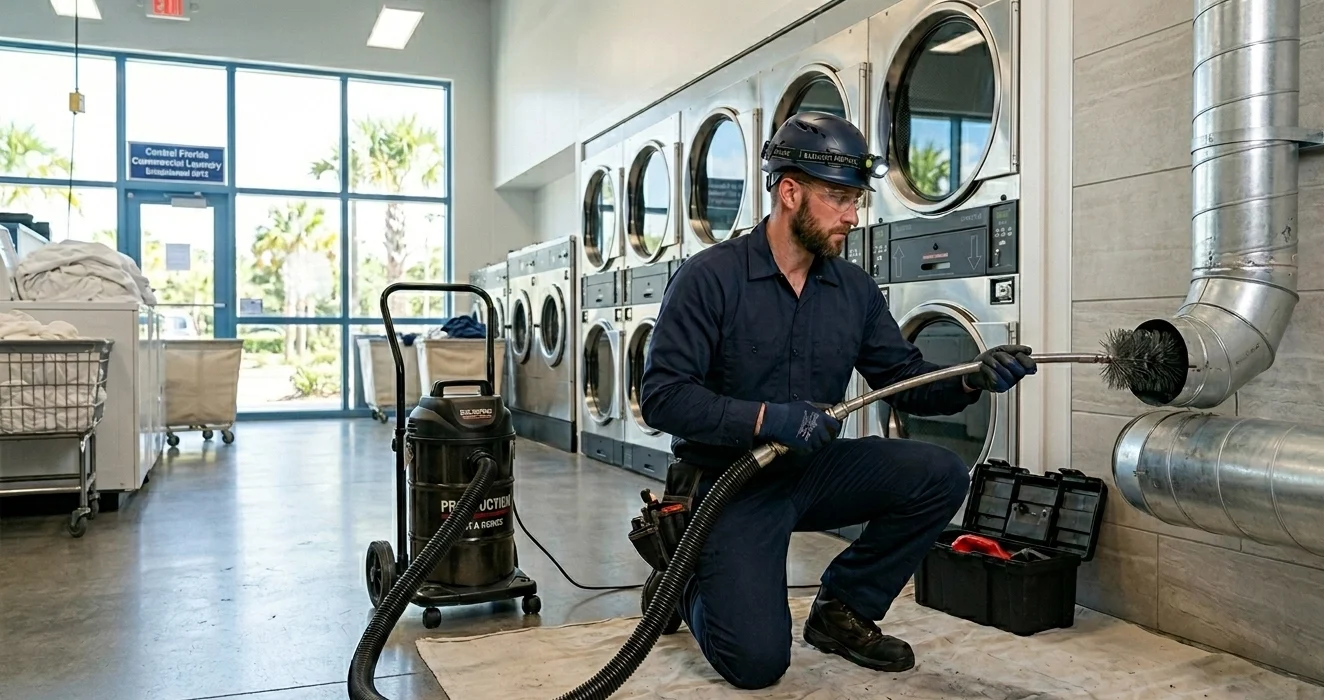
DIY cleaning methods cannot match the effectiveness of professional service. Certified technicians use high-powered vacuum systems, rotary brushes, and specialized tools to clean the entire vent line from the dryer to the exterior. They can also identify damaged ductwork, improper installations, or other issues that contribute to blockages.
At K&M Solutions, we offer comprehensive dryer vent cleaning services tailored to Central Florida homes. Our basic cleaning package removes lint and debris from the vent duct. For homes with significant buildup, our deep cleaning service includes interior dryer cleaning as well. We also provide non-toxic sanitation to eliminate odors and prevent mold growth.
Preventing Future Clogs: Maintenance Tips for Central Florida Homeowners
Clean the Lint Trap After Every Load
This simple habit is the most effective preventive measure you can take. Removing lint before each cycle prevents excess fibers from entering the vent system. Additionally, wash the lint screen with warm soapy water monthly to remove residue from fabric softeners and dryer sheets. This residue can clog the screen mesh and reduce airflow even when the trap appears clean.
Keep the Area Around Your Dryer Clear
Maintain at least six inches of clearance between your dryer and the wall. This space prevents the vent hose from becoming crushed or kinked. Furthermore, keep the floor and surrounding area free of clutter, cleaning supplies, and combustible materials. The USFA recommends keeping the area around the clothes dryer free of items that can burn.
Use the Right Venting Materials
If your home currently uses flexible foil or plastic vent hoses, consider upgrading to rigid metal ductwork. Metal ducts provide smoother airflow, resist crushing, and are less likely to trap lint. They also meet current building codes and safety standards recommended by the NFPA.
Schedule Annual Professional Inspections
Even with diligent home maintenance, professional cleaning is essential. Technicians can access and clean areas that homeowners cannot reach. They also inspect for damage, proper installation, and potential hazards. Consider combining your dryer vent service with other home maintenance tasks such as air duct cleaning or chimney sweeping for comprehensive protection.
Monitor Drying Performance
Pay attention to how your dryer performs over time. If you notice gradual changes in drying time, heat levels, or lint accumulation, do not wait for serious problems to develop. Early intervention is always safer and more affordable than emergency repairs.
Frequently Asked Questions About Clogged Dryer Vents
How often should I have my dryer vent professionally cleaned?
Most experts recommend annual professional cleaning for average households. However, if you do multiple loads daily, have a large family, or own pets that shed, you may need service every six months. The NFPA suggests cleaning at least once a year, or more frequently if you notice longer drying times.
Can I clean my dryer vent myself?
Homeowners can and should clean the lint trap and exterior vent cover regularly. However, DIY methods cannot effectively clean the entire vent duct. Professional technicians use specialized equipment to remove buildup from the full length of the vent line. Additionally, they can identify damage, improper installation, or other hazards that untrained individuals might miss.
What is the cost of professional dryer vent cleaning?
Pricing varies based on the length of your vent line, the severity of buildup, and your geographic location. Basic cleaning services typically cost less than deep cleaning packages that include interior appliance cleaning. Most reputable companies offer free estimates, so you can understand the cost before committing to service.
At K&M Solutions, we provide transparent pricing and free estimates for all our Central Florida customers.
How long does professional dryer vent cleaning take?
A standard residential cleaning appointment usually takes between one and two hours. This includes setup, cleaning, inspection, and cleanup. Homes with longer vent runs, multiple bends, or severe blockages may require additional time. Your technician should provide a time estimate during the initial consultation.
Are clogged dryer vents really a fire hazard?
Yes, absolutely. Clogged dryer vents are one of the leading causes of home fires. According to the NFPA, failure to clean the dryer and vent system is the primary factor in one-third of all dryer fires. The combination of heat, restricted airflow, and combustible lint creates ideal conditions for ignition.
What type of dryer vent hose is safest?
Rigid metal ductwork is the safest and most efficient option. It provides smooth interior surfaces that resist lint accumulation. Flexible foil and plastic hoses are more prone to crushing, sagging, and trapping debris. If your home currently uses non-metal venting, upgrading to rigid metal duct is a worthwhile safety investment.
Will cleaning my dryer vent lower my energy bills?
Yes, most homeowners notice improved efficiency after professional cleaning. A clean vent allows hot air to escape properly, reducing drying times and energy consumption. Your dryer does not need to work as hard or run as long to achieve the same results. Over time, these savings can offset the cost of regular maintenance.
UL Solutions confirms that proper airflow management is essential for both safety and energy efficiency.
What are the signs your dryer vent is clogged that I should never ignore?
Never ignore burning smells, excessive heat, or visible smoke. These symptoms indicate immediate danger and require you to stop using the dryer right away. Additionally, if your carbon monoxide detector alarms near the laundry area, evacuate immediately and call emergency services. These warning signs demand urgent professional attention.
Conclusion: Stay Safe with Regular Dryer Vent Maintenance
Recognizing the signs your dryer vent is clogged is an essential skill for every homeowner. From extended drying times and excessive heat to burning odors and visible lint accumulation, these warning signals should never be dismissed. In Central Florida’s humid climate, the risk of dangerous buildup is even greater than in other regions.
The good news is that professional help is readily available. At K&M Solutions, we bring years of experience to every dryer vent cleaning project. Our trained technicians use advanced equipment to thoroughly clean your vent system, inspect for hazards, and restore safe, efficient operation. Whether you need basic vent cleaning, deep cleaning with interior service, or non-toxic sanitation, we have the right solution for your home.
Do not wait for a serious problem to develop. If you have noticed any of the warning signs discussed in this article, or if it has been more than a year since your last professional cleaning, contact K&M Solutions today. We serve homeowners throughout Central Florida with reliable, affordable dryer vent services.
Call us now for a free estimate, or visit our dryer vent cleaning page to learn more about how we can protect your home and family.